Magical Marine Life Encounters
Three Magical Seahorse Encounters in Koh Tao Thailand
Koh Tao is known for its whale sharks and sea turtles, but every once in a while, something special appears. This summer, it was an invasion of lion’s mane jellyfish, which caused quite a stir among the island’s diving and underwater photography enthusiasts.
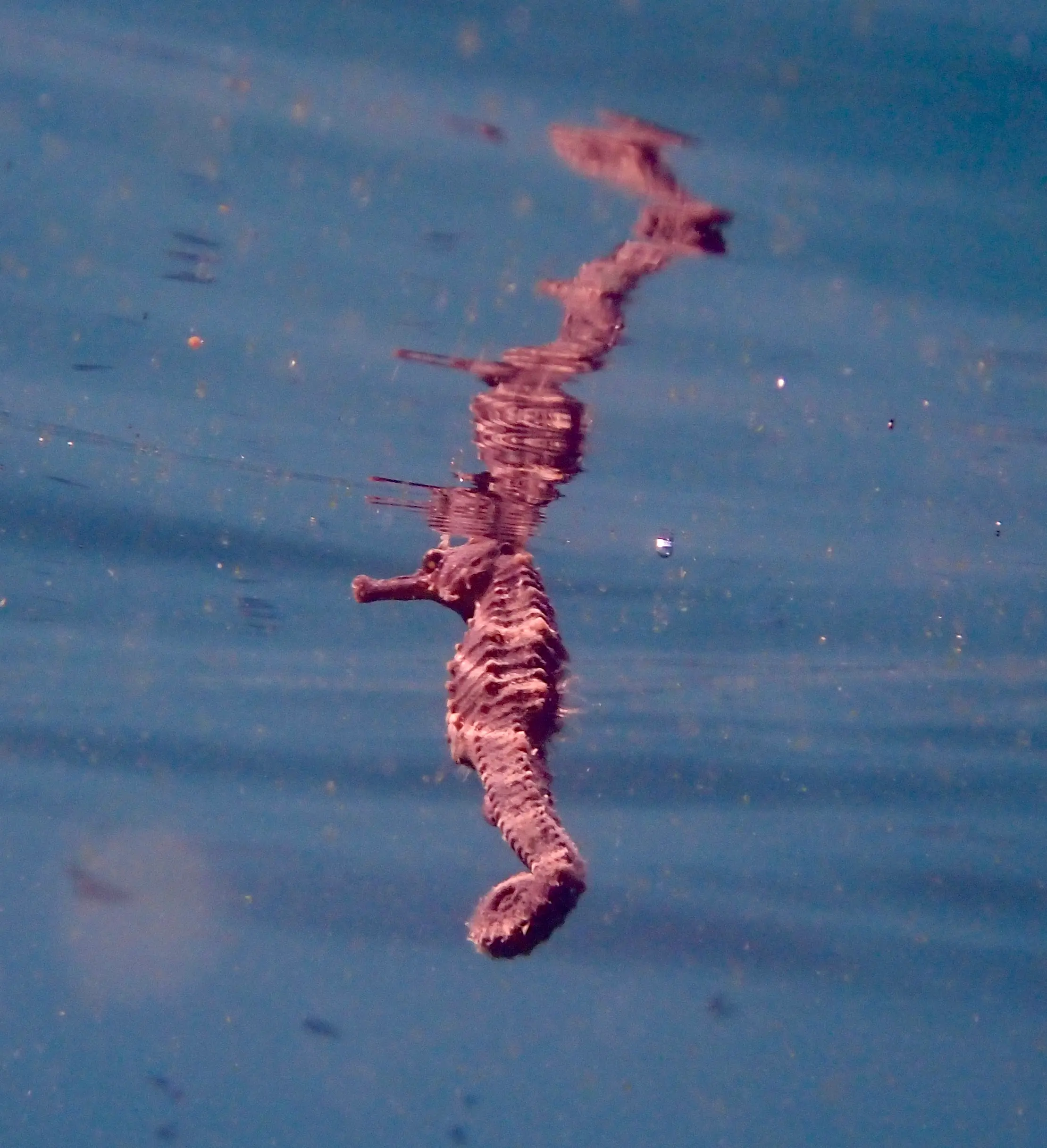
Seahorses create a quieter kind of excitement. They live in the waters around Koh Tao, but their remarkable camouflage and ability to remain almost perfectly still make them incredibly difficult to find. During years of snorkeling and diving around the island, I have encountered them only three times. Each experience was completely different, and each came with a story I will never forget.
I. Shark Bay: The Seahorse in the Storm
December 2024
The monsoon season that year was especially brutal. Days of heavy rain sent rivers of muddy water rushing through Koh Tao, carrying anything in their path toward the sea. When the weather finally calmed enough for me to safely get back in the water, I couldn’t wait to go snorkeling and search for sea turtles in Shark Bay.
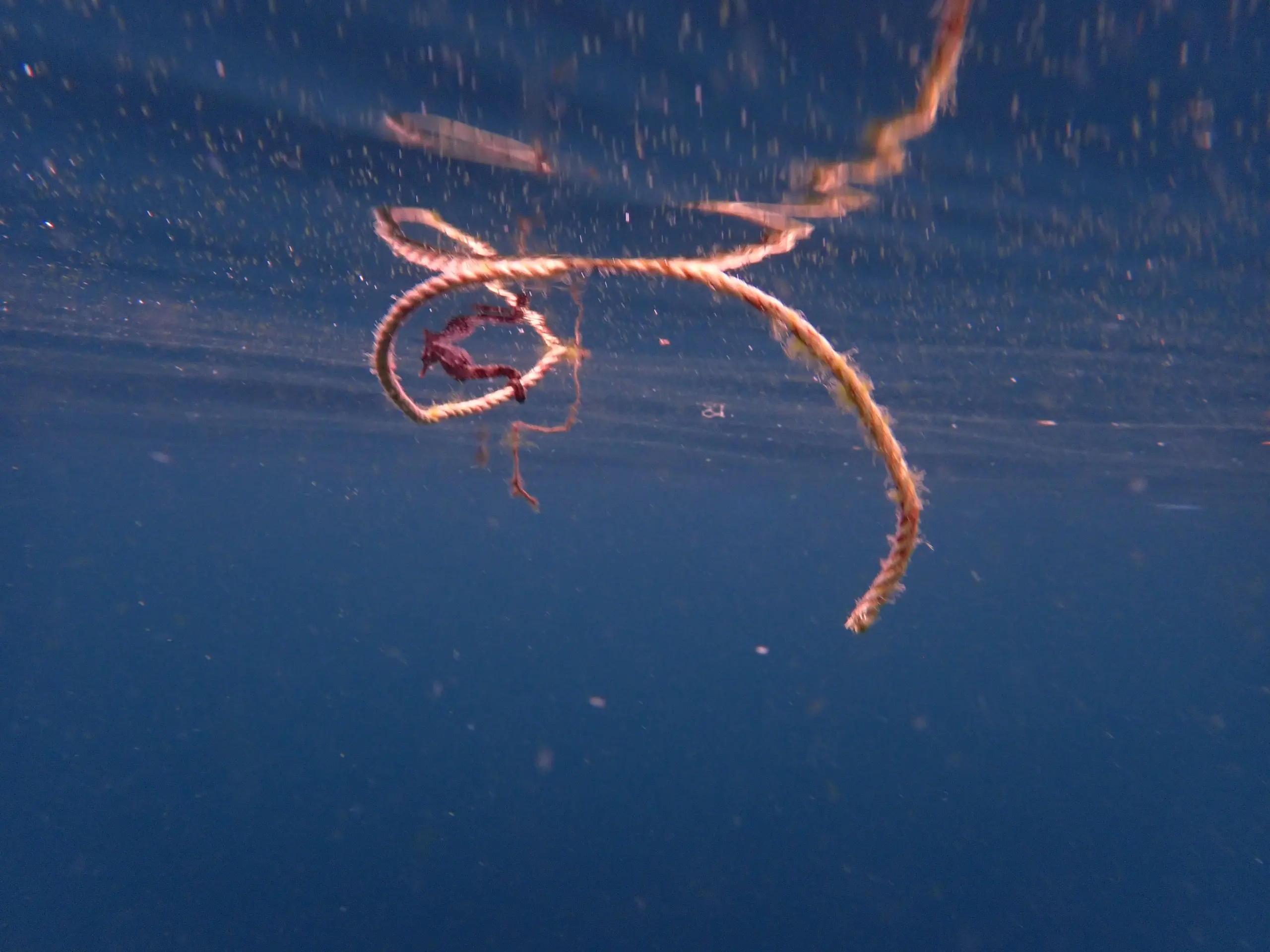
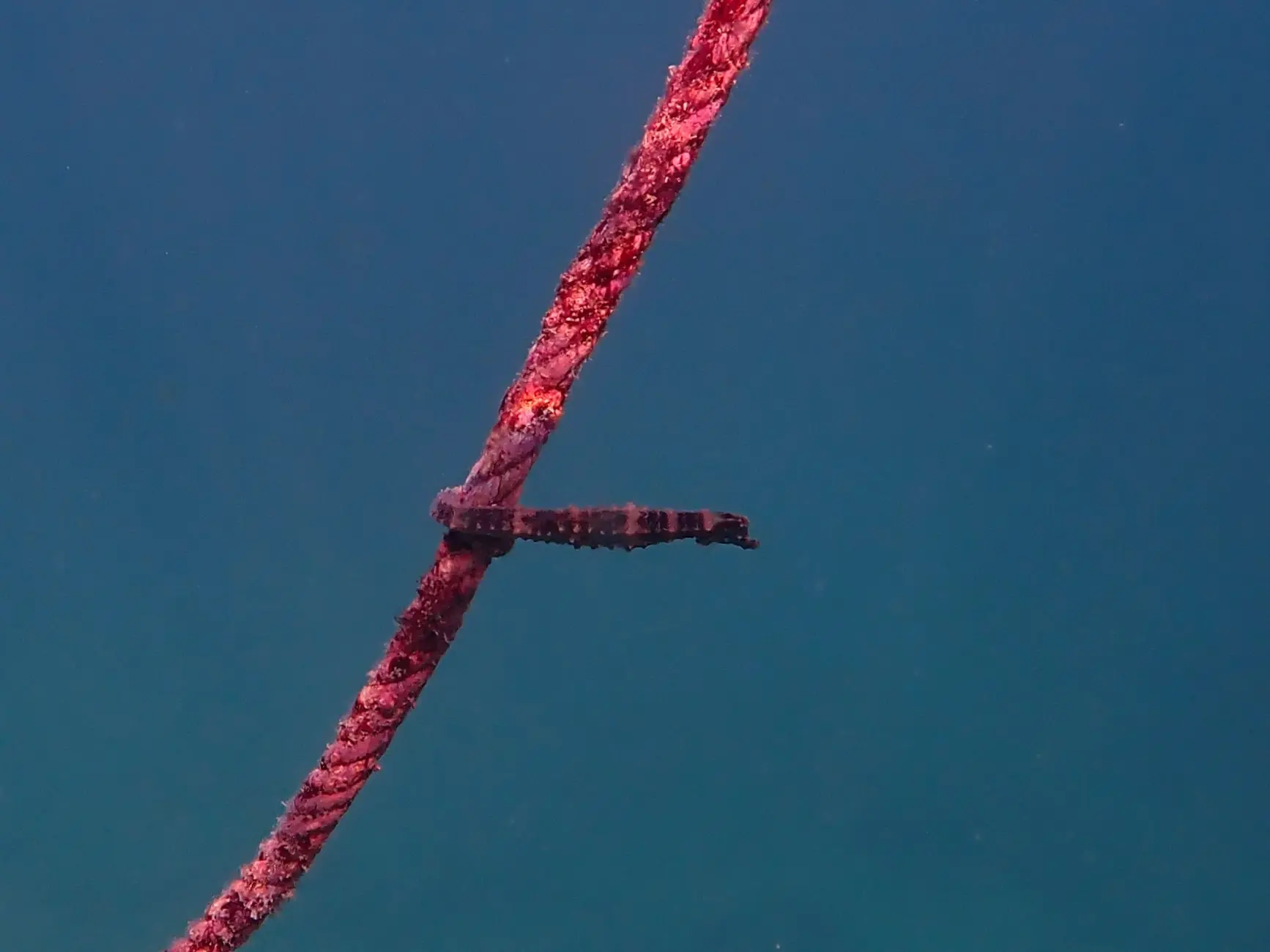
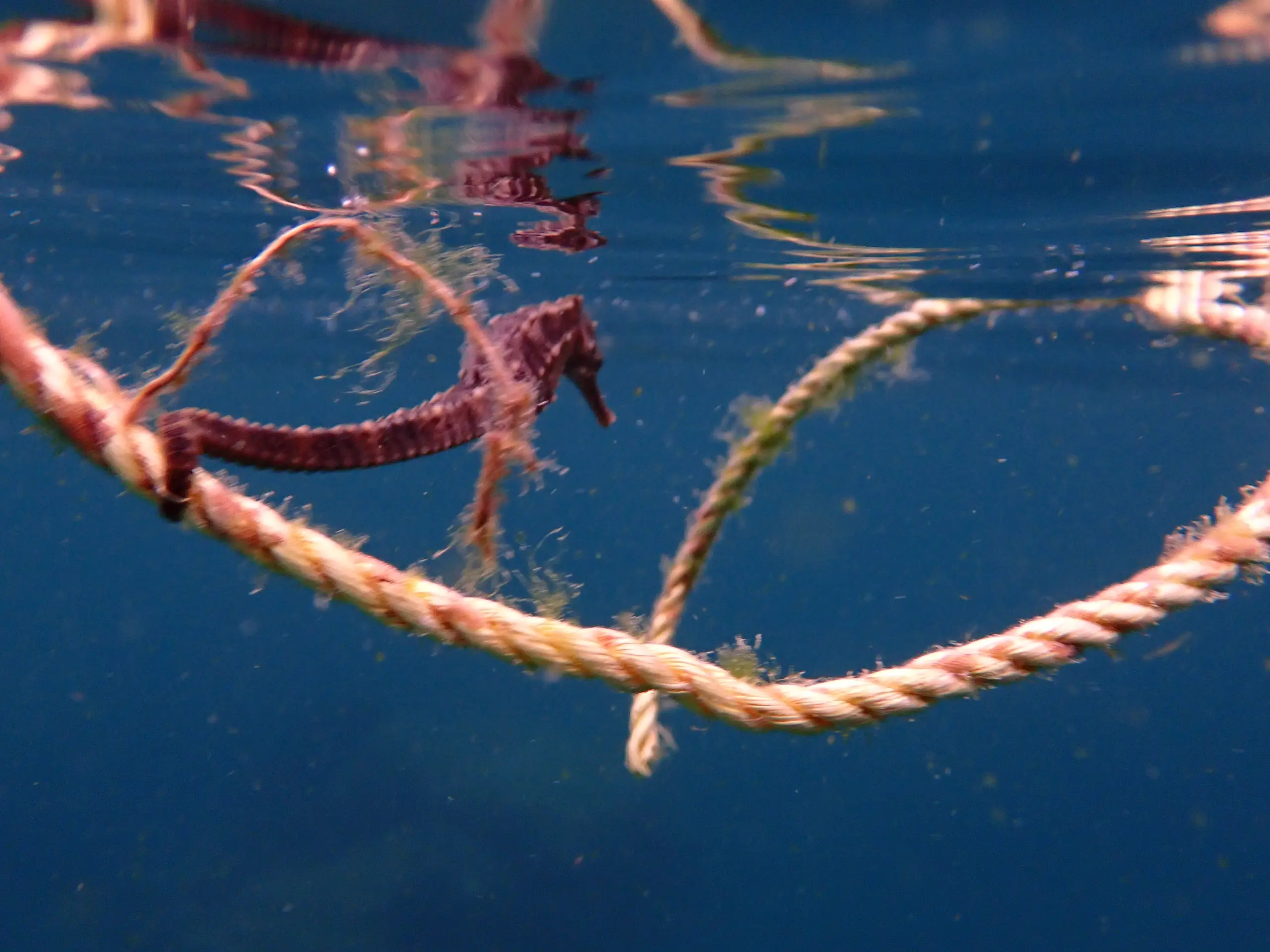
Instead, I found an ocean filled with reminders of the storm. The visibility was terrible, and trash was floating everywhere, so my turtle mission quickly became a trash-recovery mission. As I reached for another tangle of rope, plastic bags, and lighters, I noticed a tiny creature clinging to a piece of twine. Looking closer, I was delighted to discover a seahorse smaller than my pinky finger drifting among the debris.
I spent the next hour photographing it from every angle and observing its behavior, grateful that I hadn’t grabbed the rope and added it to my collection of trash. Eventually, the little seahorse began to drift away. I watched until it disappeared into the murky water, sending a silent blessing along with it.
The Seahorses of Koh Tao
Several species of seahorse have been recorded around Koh Tao. The most frequently observed is the hedgehog seahorse (Hippocampus spinosissimus), named for the short spines covering its body. Common seahorses (Hippocampus kuda) and three-spot seahorses (Hippocampus trimaculatus) have also been documented, along with occasional reports of the much larger great seahorse (Hippocampus kelloggi).
Despite living in the waters surrounding the island, seahorses are notoriously difficult to find. Their colors and textures allow them to disappear against sand, rubble, vegetation, and marine debris. They spend much of their time holding onto objects with their prehensile tails and remaining motionless. A diver or snorkeler can easily pass within a few feet of one without ever noticing it.
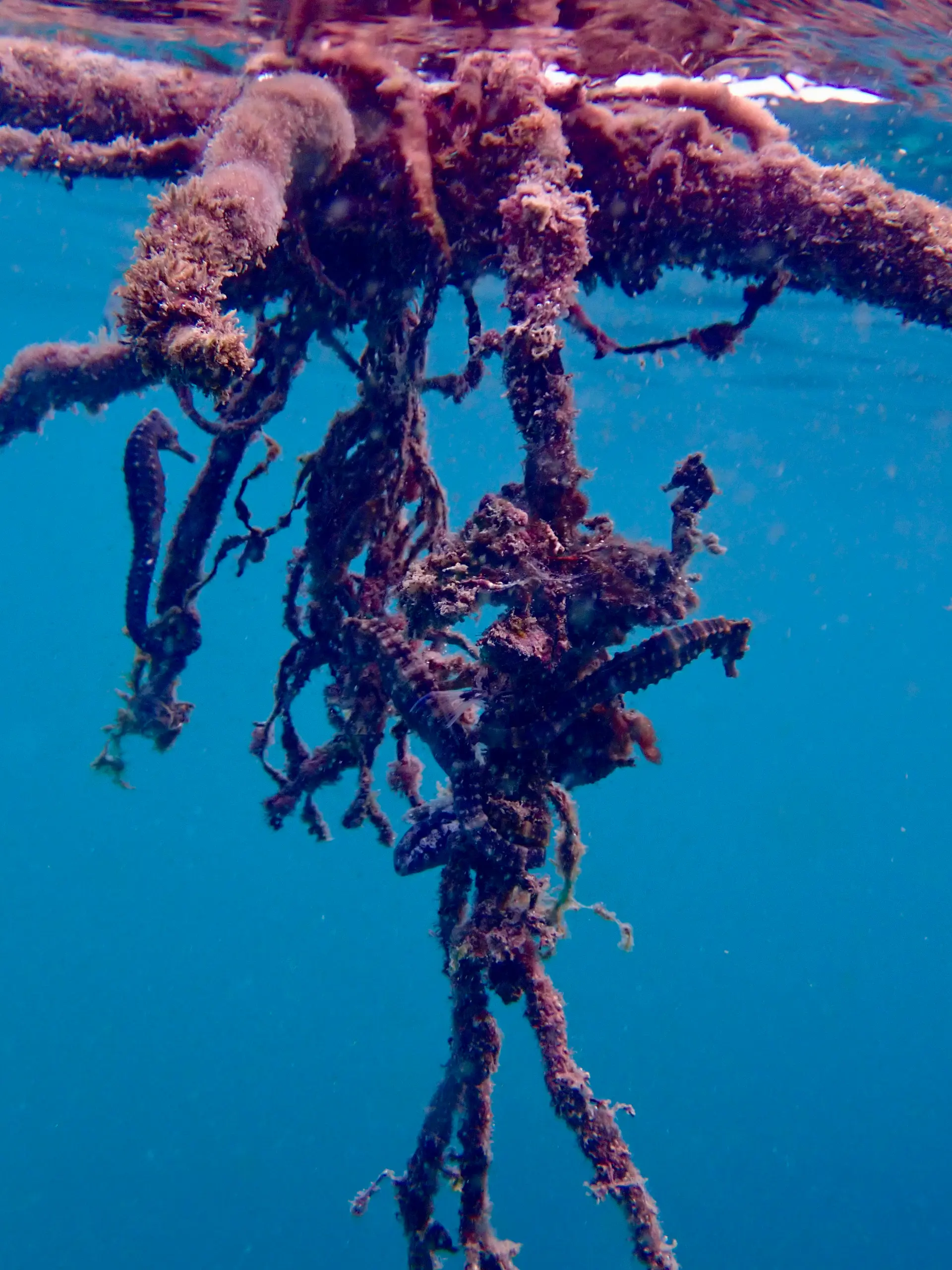
The three-spot seahorse is particularly interesting because it sometimes drifts near the surface while clinging to floating debris. This behavior makes me wonder whether my first little seahorse was a three-spot, although identifying a seahorse from appearance alone can be surprisingly difficult.
II. Tanote Bay: The Seahorse Everyone Wanted to See
Late Summer 2025
Nearly a year passed before I encountered another seahorse. This time, I wasn’t the one who discovered it. A rumor had begun circulating through Koh Tao’s diving community that one had been spotted in the sand near the concrete blocks at Tanote Bay.
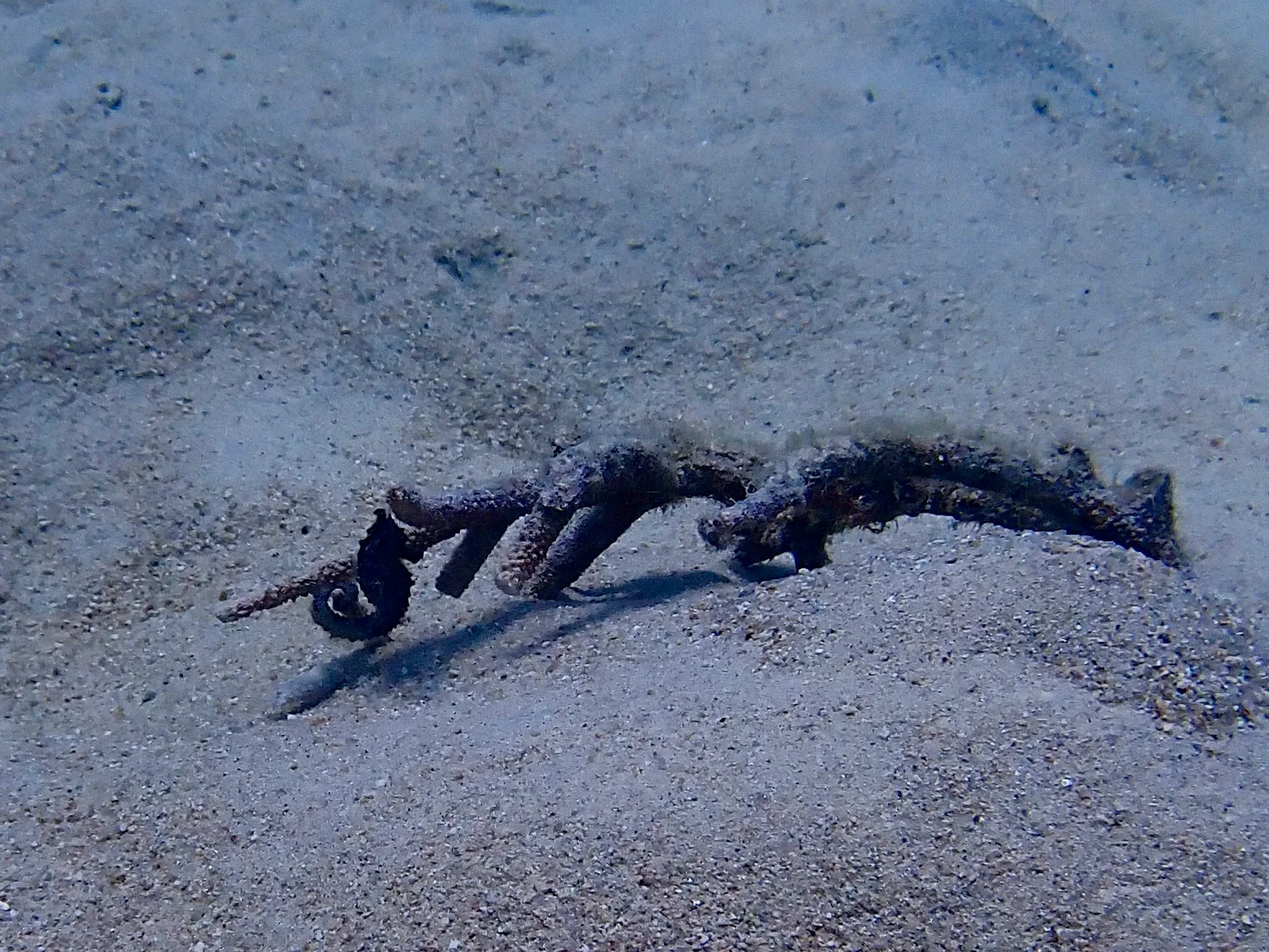
I was lucky enough to be helping Calypso (one of my favorite dive schools on Koh Tao) with a training dive, which gave me the perfect opportunity to join the search. After hearing so much about Tanote Bay’s tiny new resident, I couldn’t wait to see it for myself.
During a drop-off dive beginning at Lang Khai Bay, we found the little creature clinging to a fragment of coral in the sand near the concrete blocks. It was right in the middle of an otherwise barren patch, with almost nothing around it. Luckily, the people I was diving with knew exactly where to look, and I was able to snap a few photos.
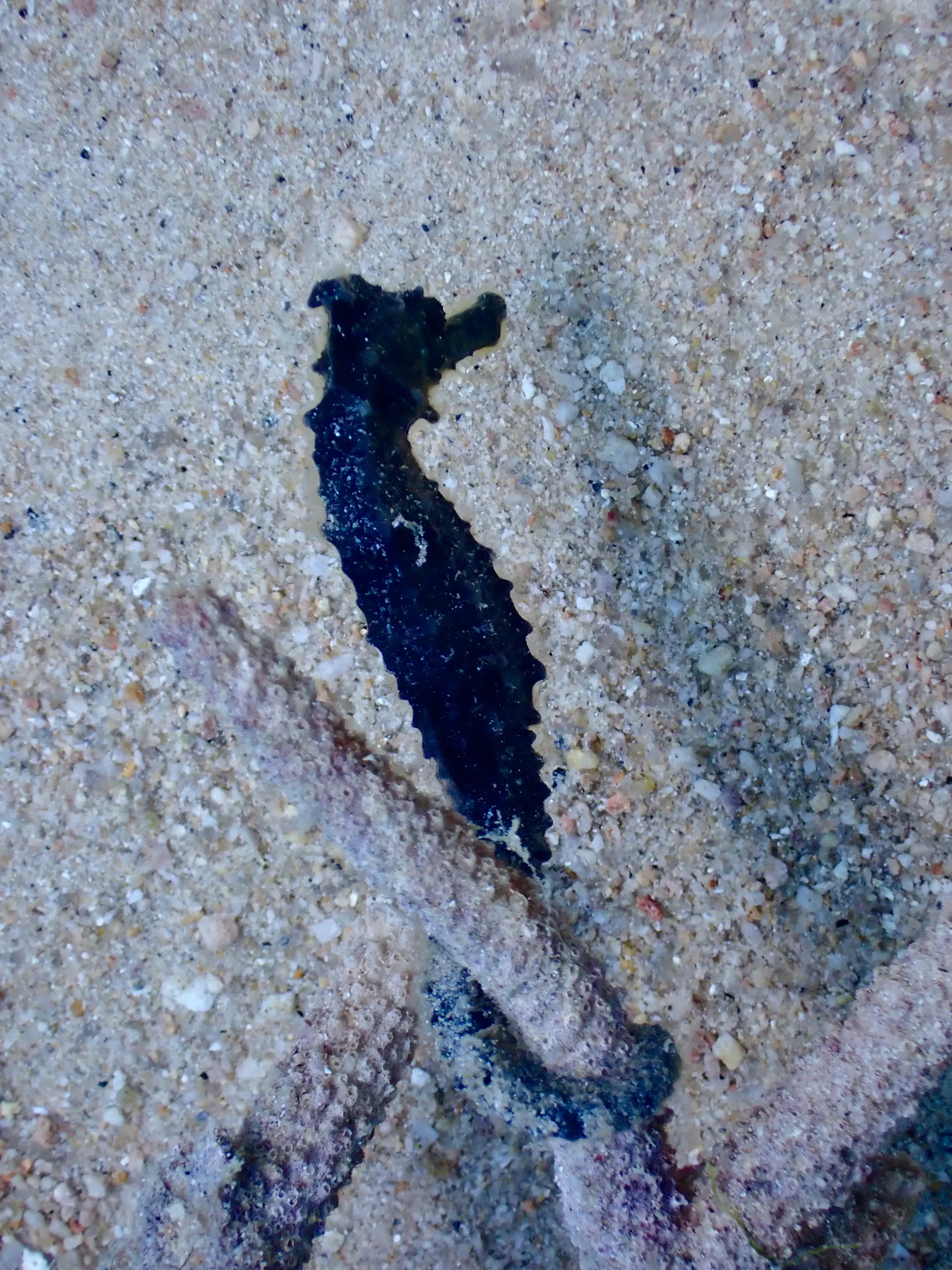
Unfortunately, the seahorse’s story took a tragic turn the following day. Another diver returned to the site and began filming it while shining a torch directly on it. As the seahorse sat illuminated against the otherwise empty sand, a red-breasted wrasse swept in and gobbled it up. The diver captured the entire encounter on camera.
Whether the torchlight attracted the wrasse or simply made the seahorse easier to spot is impossible to know. Either way, the footage spread quickly through Koh Tao’s close-knit diving community. Needless to say, the diver was not very popular on the island for the next several weeks.
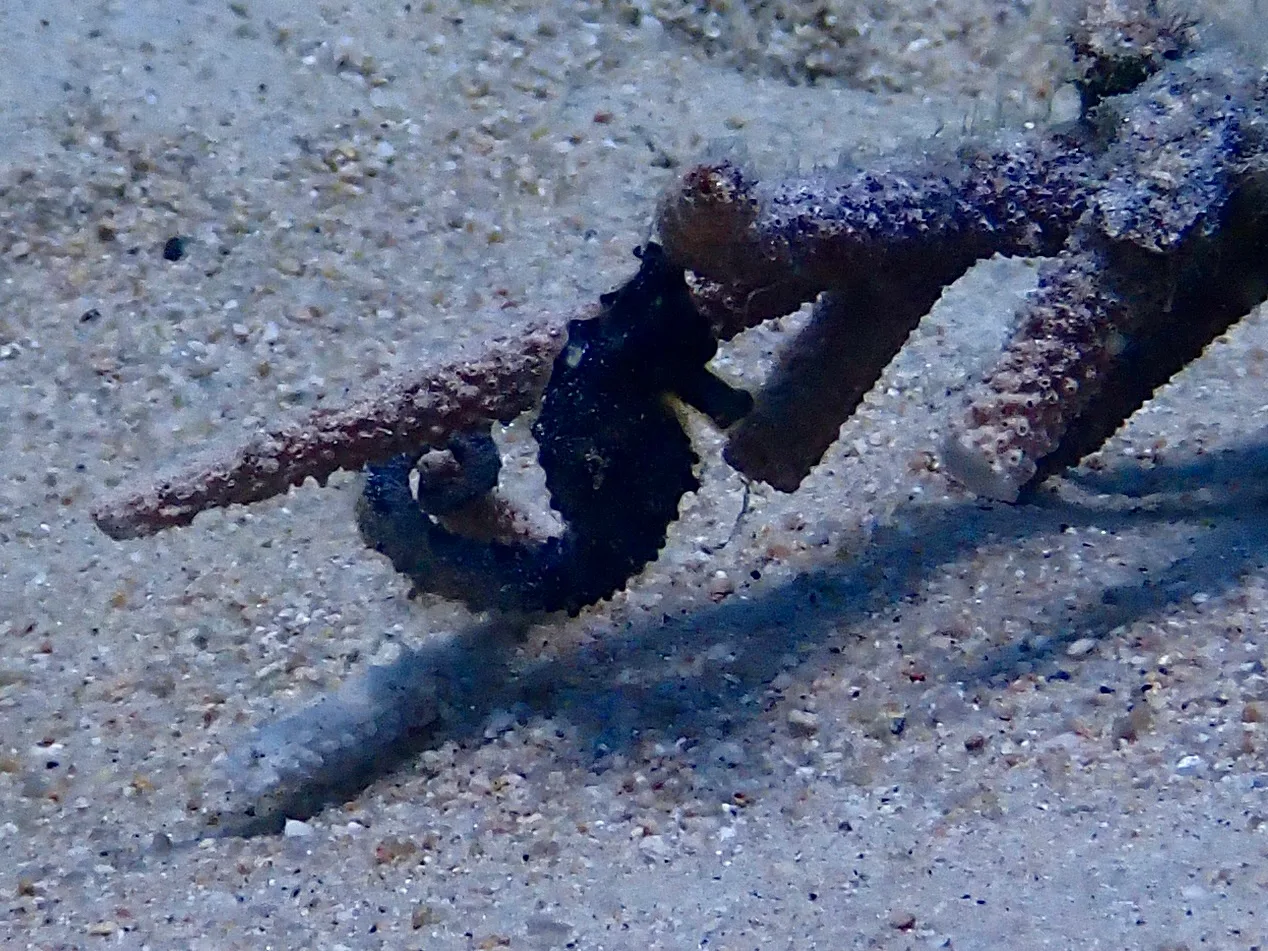
The incident was a painful reminder that there is a fine line between fascination with marine life and respect for its space. We may enter the ocean hoping to observe, photograph, and share its wonders, but we are still visitors in a world that does not belong to us. Finding a rare creature is a privilege, not an invitation to surround it, expose it, or alter its environment for the sake of a photograph. Sometimes the most respectful thing we can do is admire it quietly, keep our distance, and let it remain hidden.
III. Shark Bay: A Tiny Herd of Survivors
January 2026
A few months after the loss of Tanote Bay’s little seahorse, another round of heavy storms swept through Koh Tao. Once again, an enormous amount of trash washed into Shark Bay. Seeing the water filled with plastic, rope, and other debris was sad and disheartening, but hidden within the mess was something marvelous.
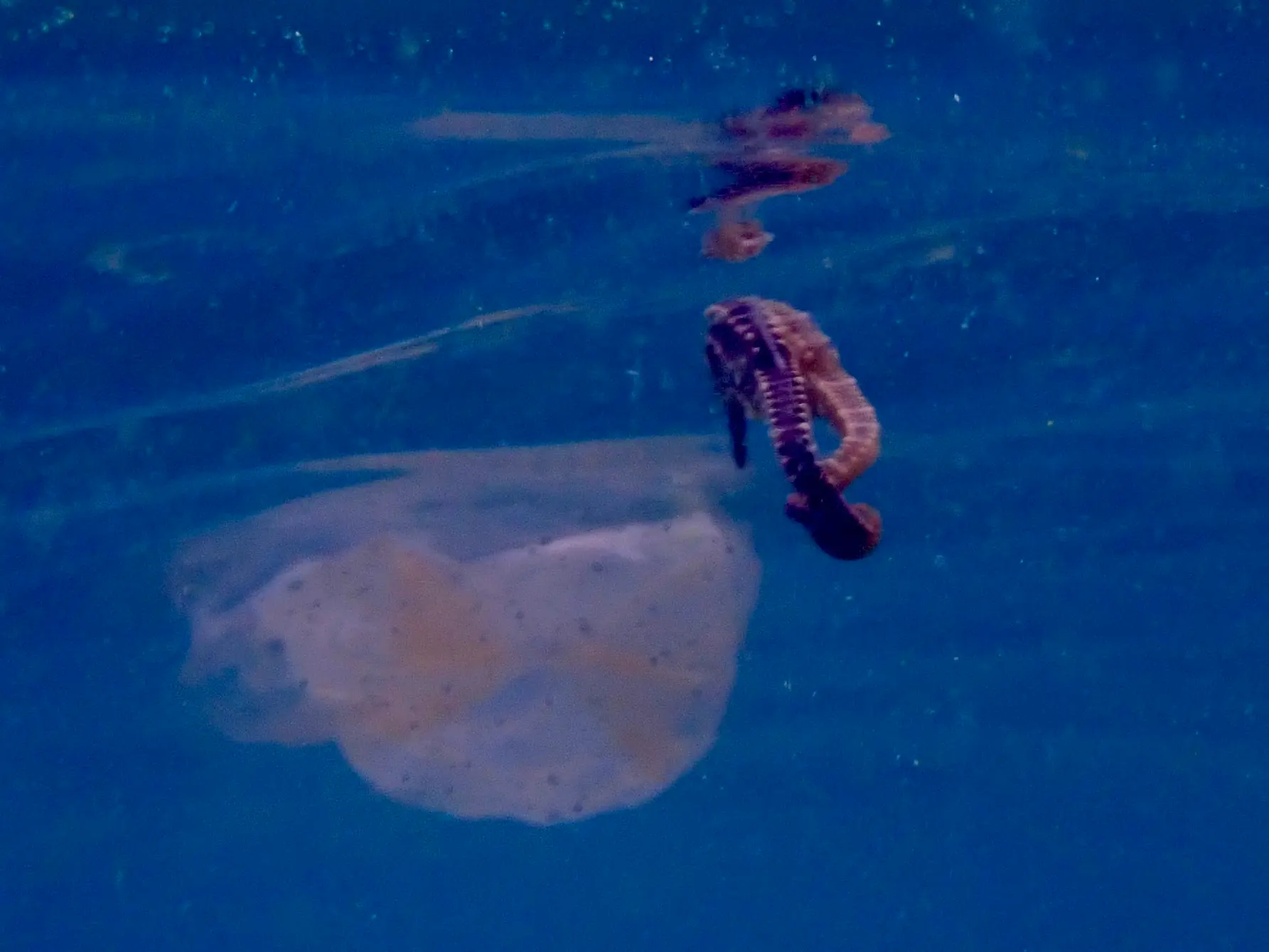
Hundreds of tiny seahorses had found shelter among the debris, wrapping their tails around pieces of rope, twine, and plastic. Everywhere I looked, another delicate shape emerged from the wreckage. After years of feeling extraordinarily lucky to see a single seahorse, I could hardly believe what I was witnessing.
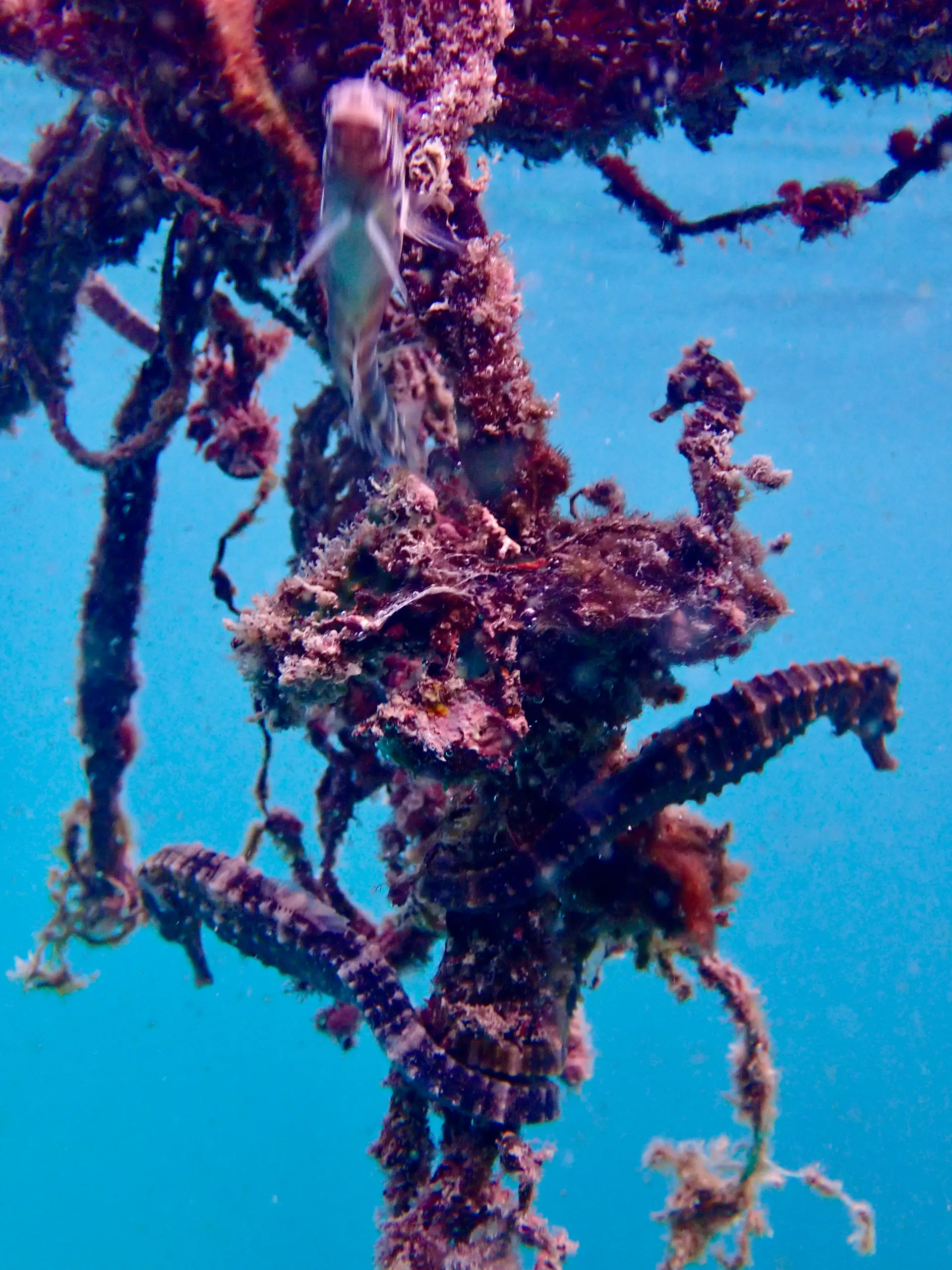
They formed tiny communities within the debris, huddled together in clusters. Many curled their tails around one another, as if holding on so they wouldn’t become separated and drift away.
It was one of the most incredible things I had ever encountered in Shark Bay. The same debris that represented so much human carelessness had become a temporary refuge for hundreds of tiny lives.
Magic, Resilience, and Respect
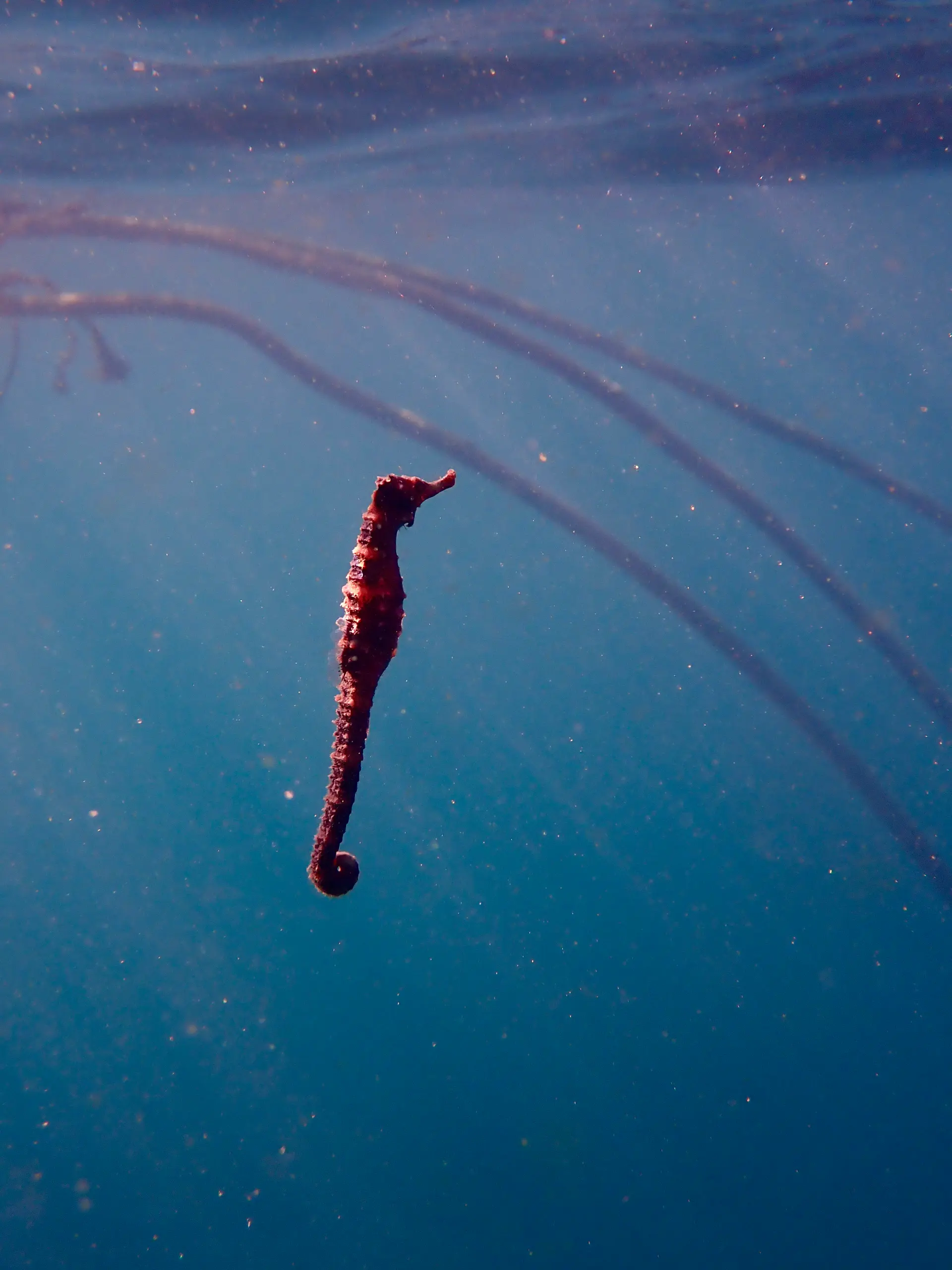
My three seahorse encounters could not have been more different. The first taught me to look carefully before removing something from the ocean. The second reminded me that our fascination with marine life must always be balanced with respect. The third revealed just how much can remain hidden beneath the surface, even in a place I thought I knew so well.
Watching hundreds of seahorses shelter among the storm debris was both magical and heartbreaking. Their ability to adapt does not mean the trash belongs there. It only demonstrates how resourceful marine life must become in an ocean increasingly shaped by human carelessness.
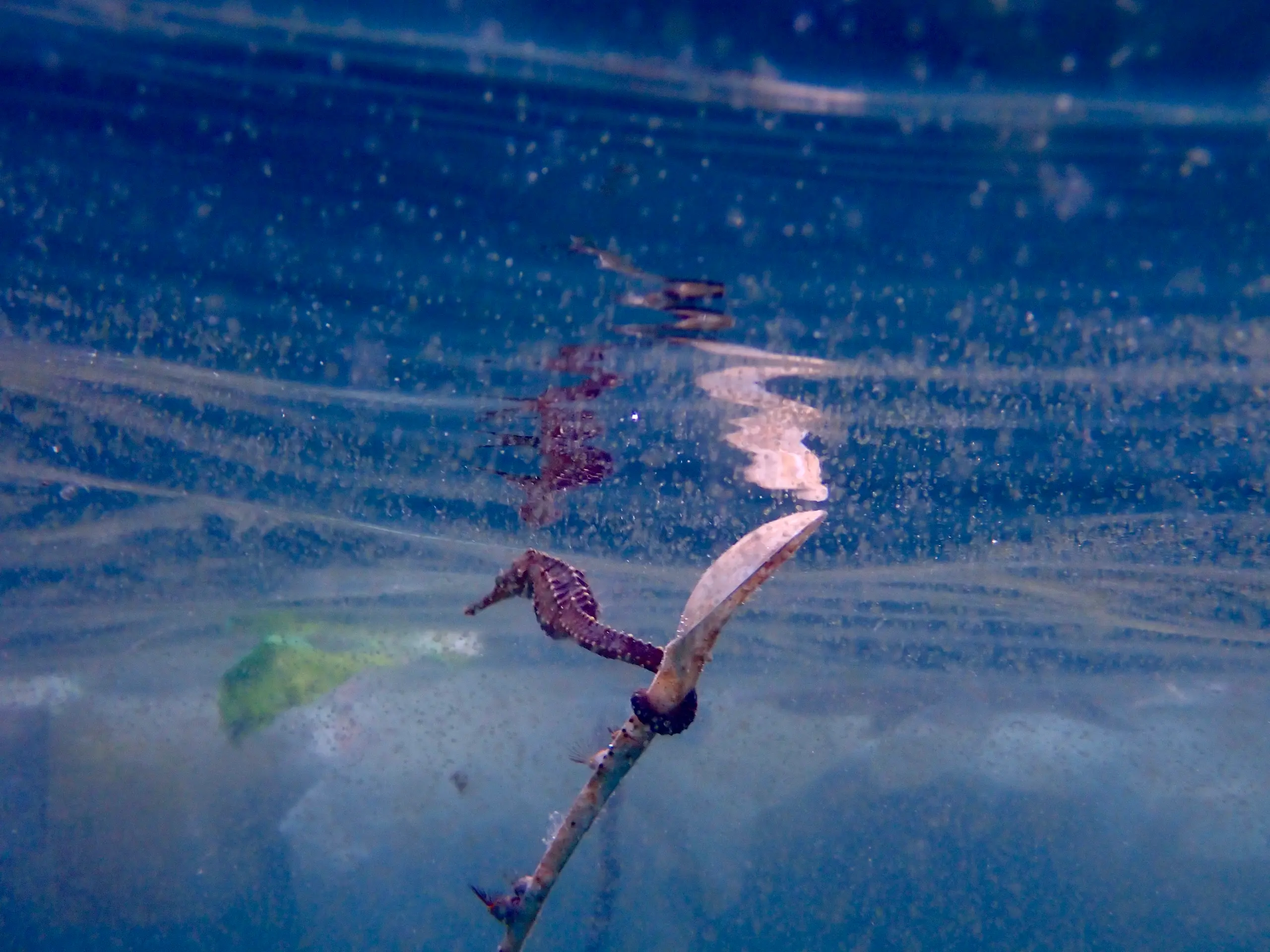
Perhaps I was projecting human emotions onto them, but as I watched those tiny seahorses huddled together, their tails wrapped around the debris and one another, they seemed determined not to let go. After everything the storms had carried into Shark Bay, the ocean had revealed something extraordinary: a tiny herd of survivors holding on beneath the surface, waiting for someone to slow down long enough to see them.
Jennifer Varner
American expat living on Koh Tao since 2021. Travel consultant for solo travelers heading to Thailand. More about Jennifer.
More from Magical Marine Life Encounters
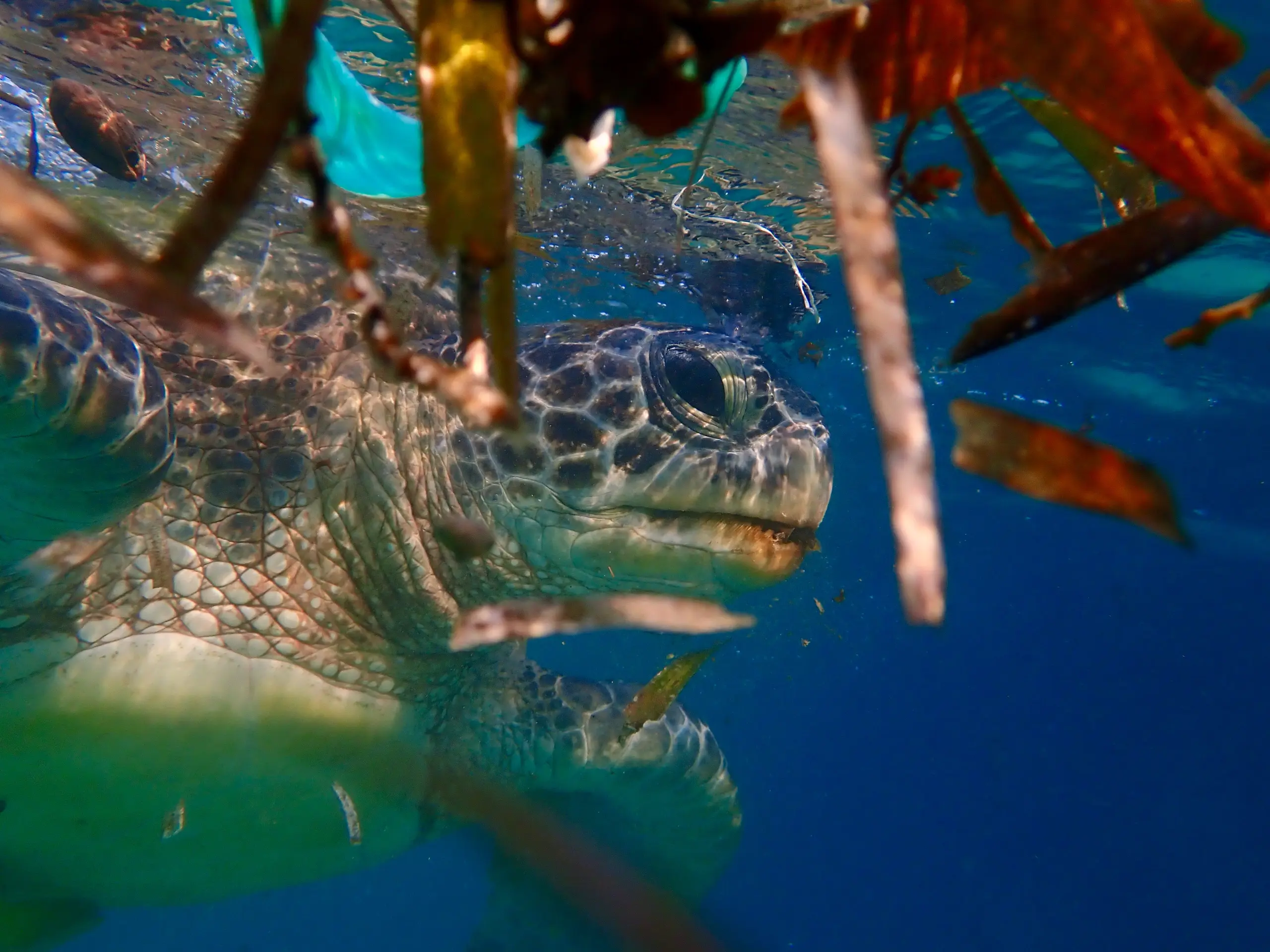
Names Beneath the Surface: Stories of Koh Tao's Sea Turtles
Originally published by IOSEA for its 25th anniversary, discover the names, personalities, and stories of Koh Tao's beloved sea turtles.
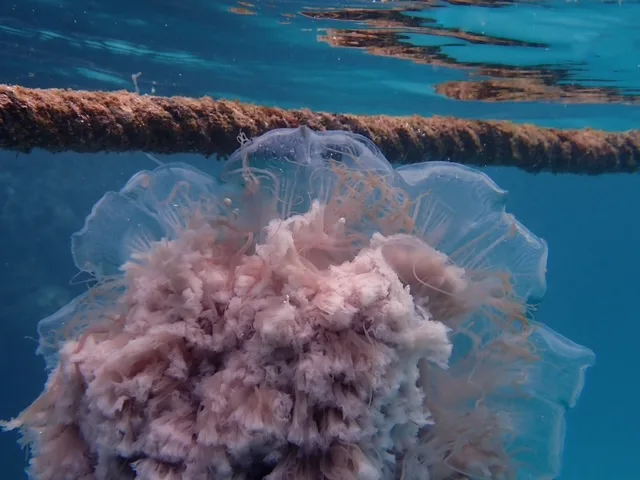
Lion's Mane Jellyfish in Koh Tao: An Unforgettable Ocean Encounter
Lion’s Mane jellyfish have appeared around Koh Tao, Thailand. Here’s what we know about these unusual visitors and what it’s like to encounter one.
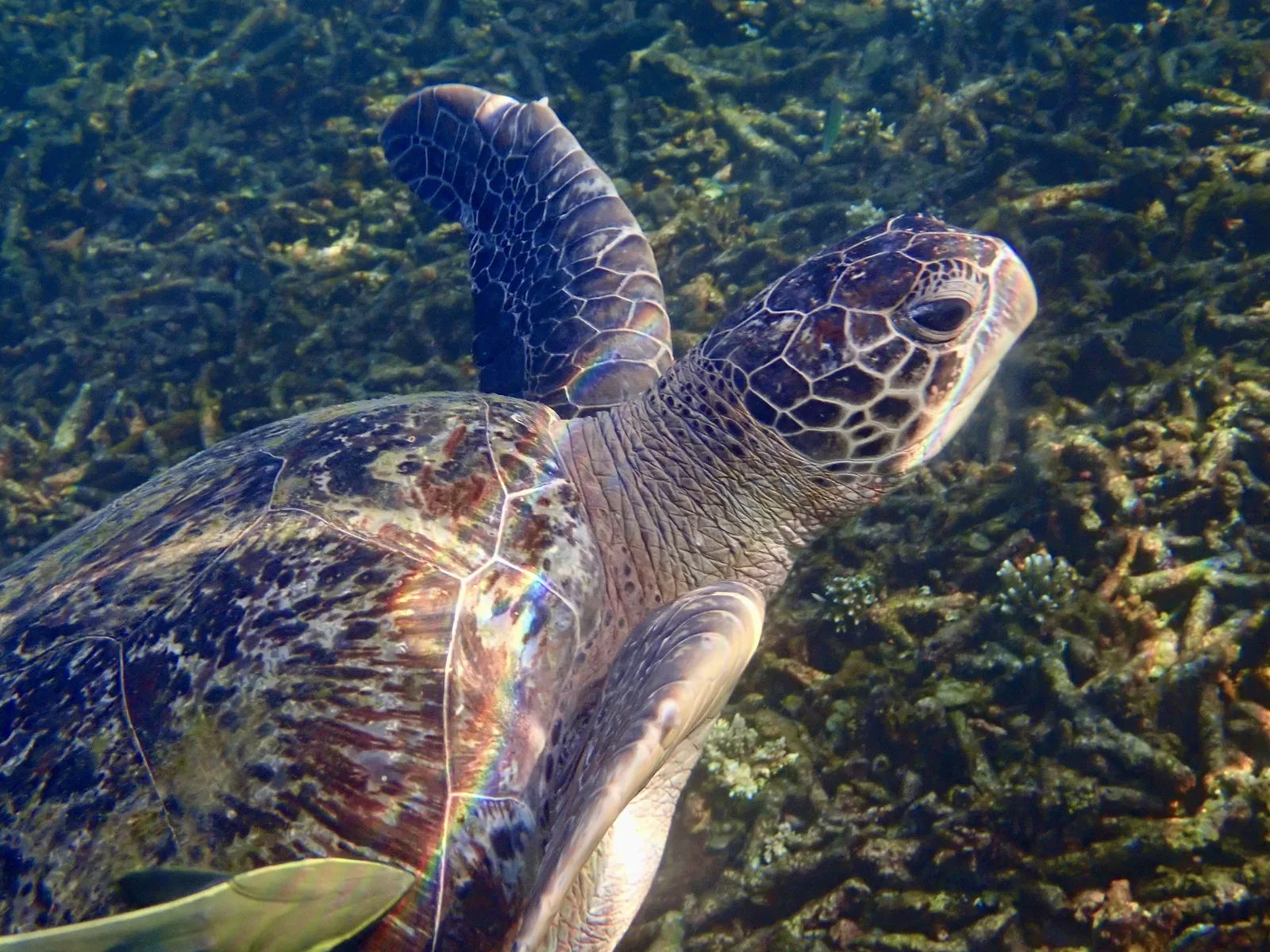
Koh Tao Sea Turtles in Shark Bay, Thailand
On the southern tip of Koh Tao lies Shark Bay , a crescent of turquoise water known for its resident sea turtles. It's one of the few places in Thailand where you can still swim alongside these wild c
Want a real conversation about your trip?
Quick Question, Trip Plan, or Full Itinerary Support. Three tiers from $45.
See the Three Tiers